THE EXTREMELY CHARMING PAINTINGS BY SOSSE BRAUN
AT THE EASTERN AUTOBAHN SLIP ROAD
OPENING: APRIL 5 / 6pm
APRIL 6 - MAY 18 / 2025
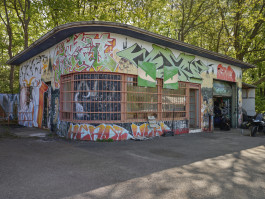
ALTE TANKSTELLE DEUTZ
OPENING HOURS
ALL SUNDAYS 2-6pm
In the Spring/Summer 2014 collection, Italian fashion house Fendi launched the first Monster Eyes Bag. With its iconic design and hypnotic gaze, the brand claimed nothing less than a commitment to bold creativity. The motif—with its striking yellow eyes—circulated across bags, shoes, and shirts.
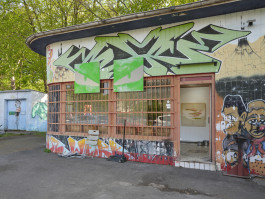
On the exterior façade of the former gas station, Marcel Hiller’s painterly practice materializes, briefly, in concrete form. The Monster Eyes beam back into their surroundings from reflective fabric like a pair of oversized car headlights. A painterly gesture becomes painted expression—and then a pop-culturally coded, fixed stare.
Hiller is primarily interested in a process-oriented, dynamic engagement with space, language, and temporality. His variable arrangements, site-specific installations, and texts are reflections on his own actions, those actions in relation to space, and the authorship of those actions. His approach is a constant interplay—at times a struggle, ultimately an acceptance of the ongoing mutability of things and conditions.
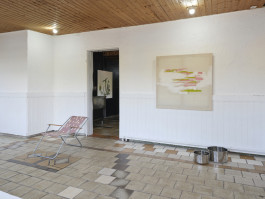
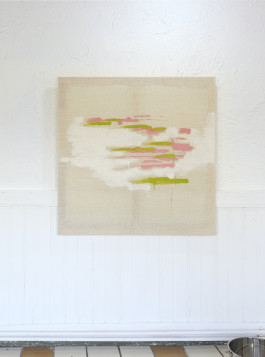
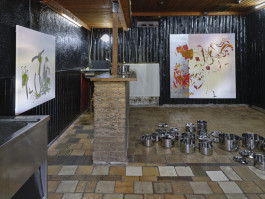
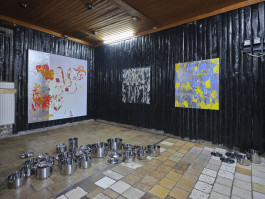
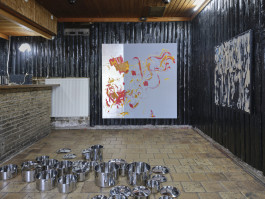
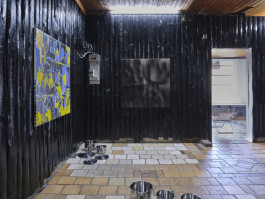
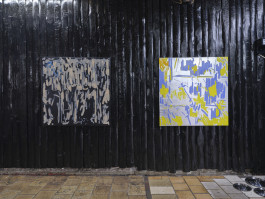
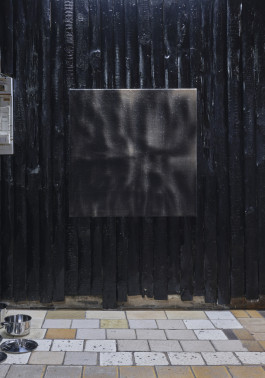
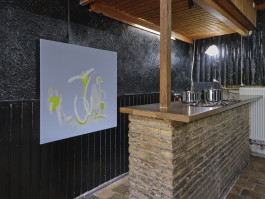
The exhibition at Alte Tankstelle Deutz marks a surprising, intuitive return to color and canvas. In ghostly gestures and symbolic patterns, brushstrokes remain on five square-meter paintings—and one larger yet equally square work—as pure painted material in an abstract state. The image support, in turn, emerges from behind the color depending on the light, revealing its functional fabric surface. The paintings take shape through the movement of the viewer’s eye and the spatial conditions around them. They exist in a perpetual state of transformation. Coated with microscopic prisms or special surface finishes, the reflective fabrics redirect and concentrate light beams back toward their sources. Often used in safety contexts—on roads or construction sites—these materialsserve as signal-giving surfaces in high-visibility clothing, road signs, and safety vests. Stretched and relocated into the interior, the fabric’s original function becomes a reference, and its aesthetic quality the foundation and underlayer of this exhibition.
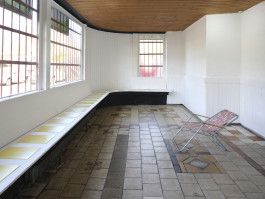
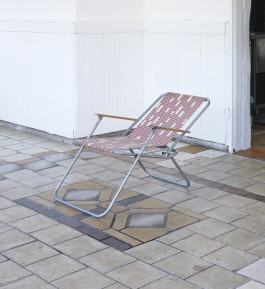
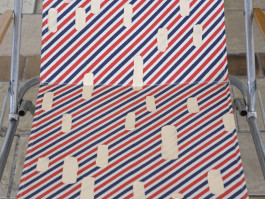
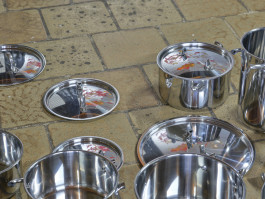
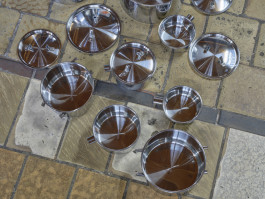
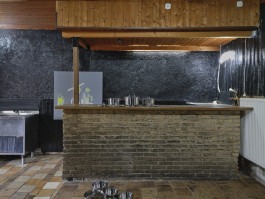
The principle of emptying and shifting functionality becomes a central theme. On the floor and atop the counter, an arrangement of cooking pots plays with the threatening idea of grabbing a hot pot—one whose handles appear to have gone missing. With simple cuts, the steel handles have been rendered nonfunctional. The everyday object loses part of its purpose and becomes a dysfunctional sculpture. A second found object, a fabric-covered folding chair, feels like a relic from another time. It connects lines of sight; its backrest slightly bent, its striped material repurposed here as a painting ground.
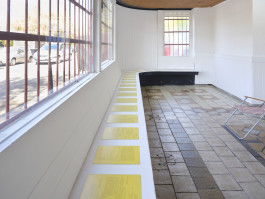
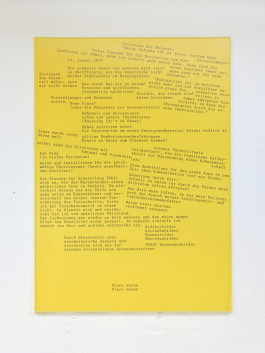
A bench running along the wall has also been stripped of its function. It now acts as a pedestal for 21 texts. Typed on a typewriter, the Interviews On Yellow Paper document the process of the exhibition’s becoming through eclectic textual fragments. Each page begins with a date. The early entries play with vague ideas and the notion of conducting interviews at the former gas station. Later, painting comes into focus—as both act and concept. Not merely a visual medium, but a mode of thinking, a decision-making process, and a way of situating oneself in society. At the same time, existential and everyday themes run through the text: routines, coffee, spaces, corporeality, the relationship between art and life—and art and consumerism. Four months of work, internal negotiation of one's own position, the recurring questioning of painting, and fleeting, associative thoughts pour out onto bright yellow A4 paper—reminiscent of the Fendi yellow in the flashing eyes of the now eleven-year-old bag design.
Klara Hülskamp